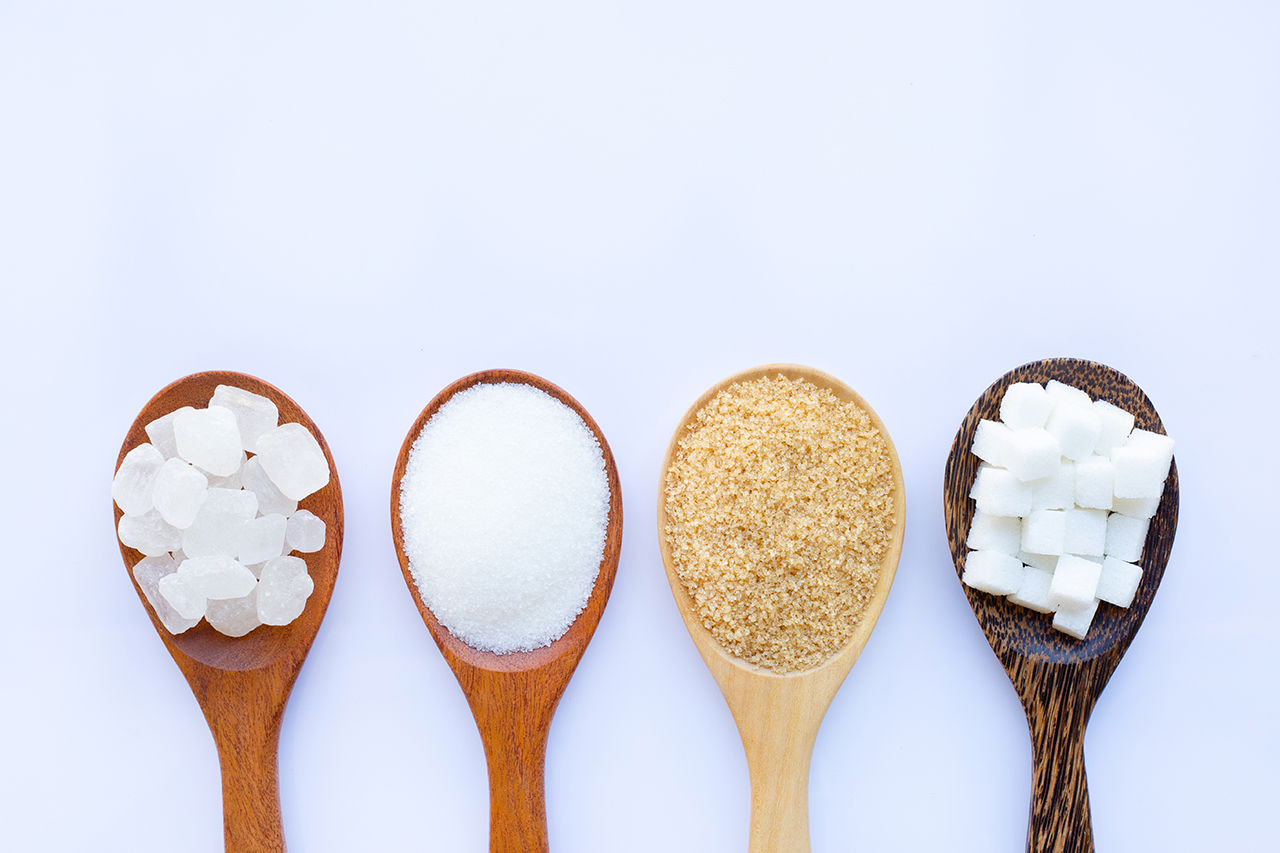
There is no universal “best” sweetener
Permitted sweeteners have undergone safety evaluation for specified uses and intake levels, but they differ greatly in sensory profile, origin, physical properties and technological function. The best option is therefore the one that fits the product, process and market positioning.
Origin: useful for positioning, but not a complete technical classification
Marketing often divides sweeteners into synthetic, natural-origin and intermediate categories. In regulatory practice, however, the term “natural sweetener” is not universally defined in the same way across markets.
A sweetener’s perceived origin can also depend on the production route. Fermentation, extraction, catalytic conversion and chemical synthesis may lead to different positioning even when the functional purpose is similar.

Bulk sweeteners
Polyols — also known as sugar alcohols — are used where manufacturers need not only sweetness but also solids, texture and water-management functionality. Examples include sorbitol, maltitol, xylitol and erythritol.
Erythritol is commonly produced by fermentation, while other polyols may be produced through catalytic hydrogenation or other industrial processes. Their caloric value, cooling effect, solubility and digestive tolerance differ, so they cannot be treated as direct equivalents.

High-intensity sweeteners
High-intensity sweeteners deliver strong sweetness at low dosage. Many are synthesized, while others such as steviol glycosides and thaumatin are derived from plant materials using extraction and purification processes.
Research also continues into sweet-tasting proteins and next-generation biotechnological production methods, with a focus on better stability and cleaner temporal sweetness profiles.
Sweetener blends
Blends combine two or more sweeteners to improve sweetness quality, mask aftertaste, create synergy, reduce cost or compensate for the weaknesses of a single component. In many reduced-sugar products, the blend is more important than any individual ingredient.
Origin and labeling claims for a blend should be checked carefully against the regulations of the target market.

How WM selects a sweetening system
We evaluate the sweetener together with the food matrix. Key factors include:
- target sweetness and sweetness curve;
- aftertaste and interaction with flavor;
- need for bulk, mouthfeel and moisture control;
- pH, temperature and storage conditions;
- desired labeling and origin positioning;
- cost-in-use and applicable legislation.
The result may be a single sweetener, a blend or a complete system that also uses flavor modulation and bulking ingredients.
Reference resources: EFSA — Sweeteners; WHO — Guideline on the use of non-sugar sweeteners; WHO/JECFA evaluations; Codex Alimentarius — GSFA.