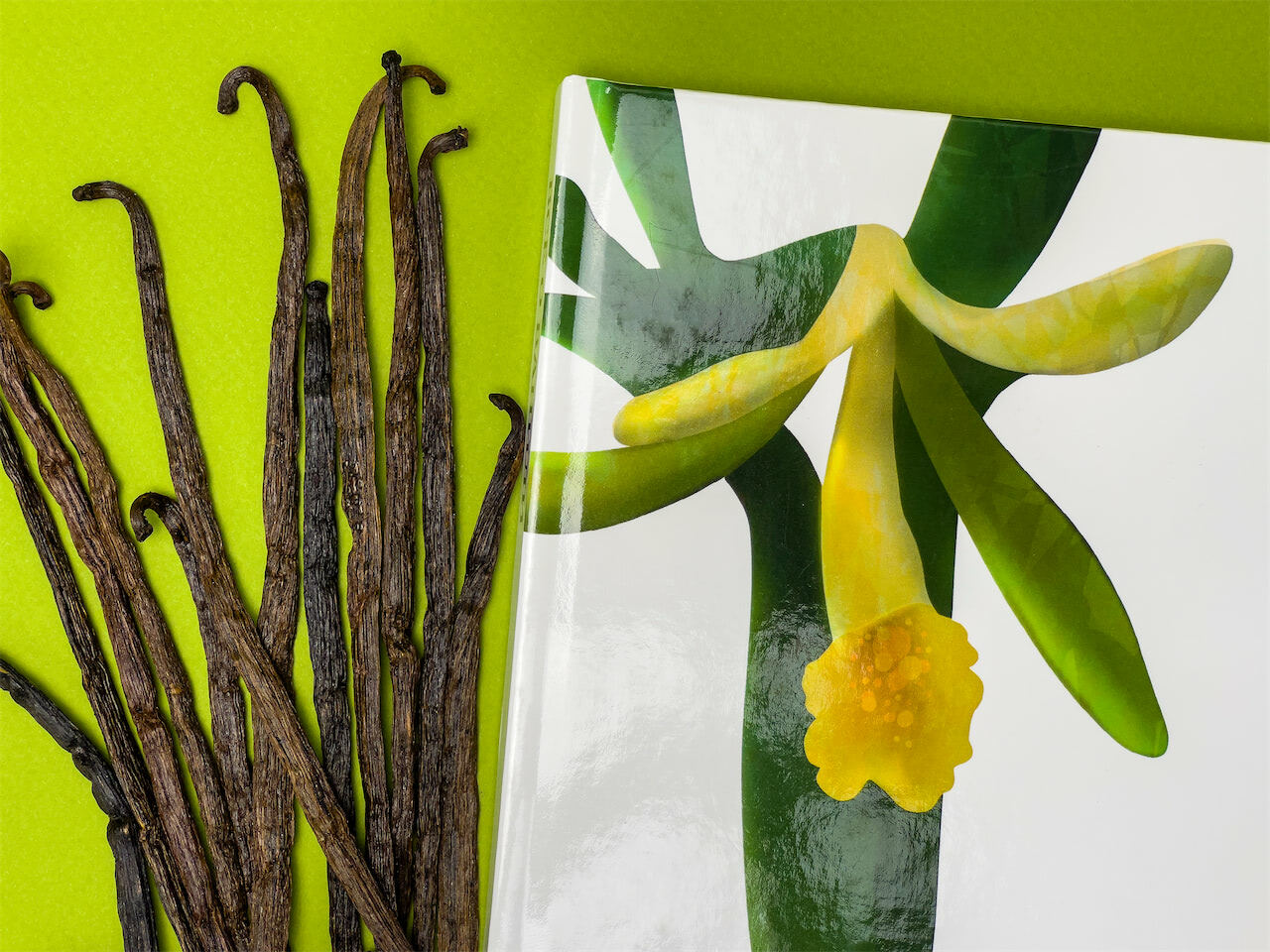
What counts as natural vanilla?
Natural vanilla comes from cured pods of Vanilla species and is traded in several physical forms. Common commercial forms include whole or split beans, cut or broken vanilla, mixed bean fragments and vanilla powder produced by grinding dried beans.
Quality specifications commonly consider moisture, origin, curing quality and vanillin content, but natural vanilla is chemically much more complex than vanillin alone.
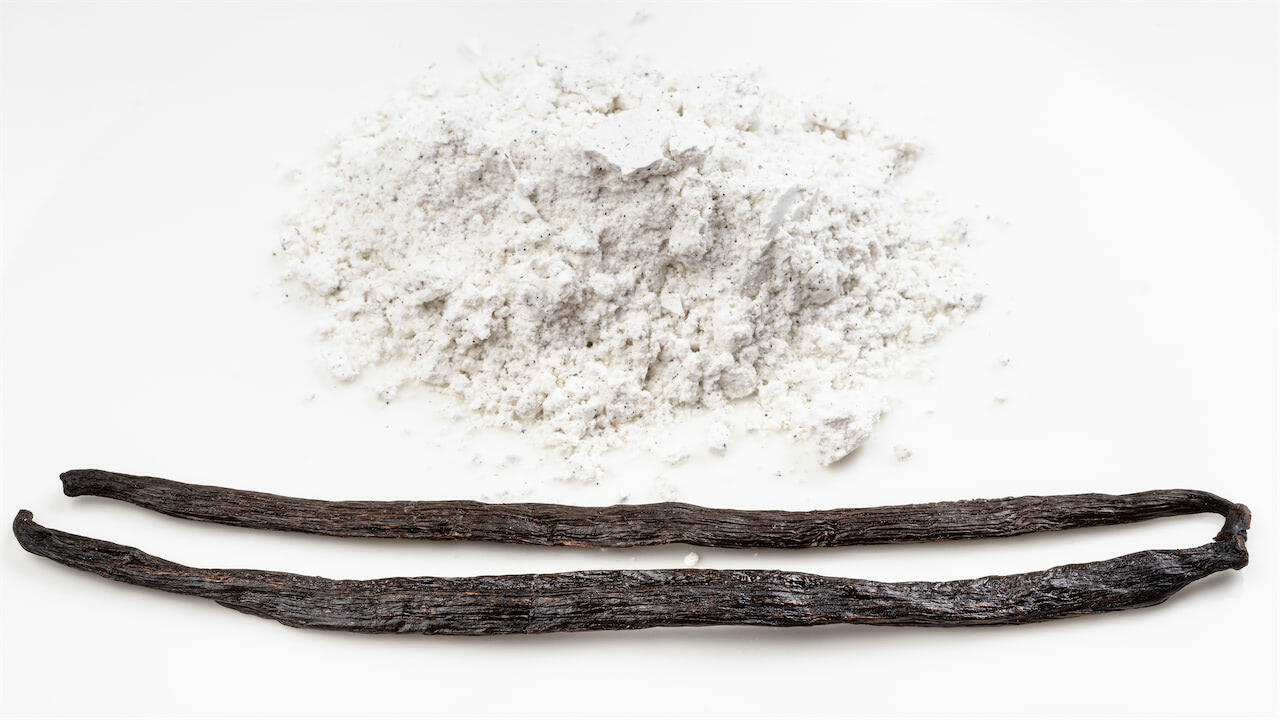
Where is natural vanilla used?
Because vanilla beans are labor-intensive agricultural products, natural vanilla is usually reserved for applications where provenance, visible seeds and a complex authentic profile justify the cost.
Typical applications include premium chocolate and confectionery, pastry creams and fillings, ice cream and dairy desserts, coffee and cocoa drinks, cocktails, liqueurs and restaurant desserts.
Natural vanilla provides a multidimensional aroma created by many compounds working together. Formulated vanilla flavors can reproduce or reinterpret that character more economically, but they are a different ingredient system.
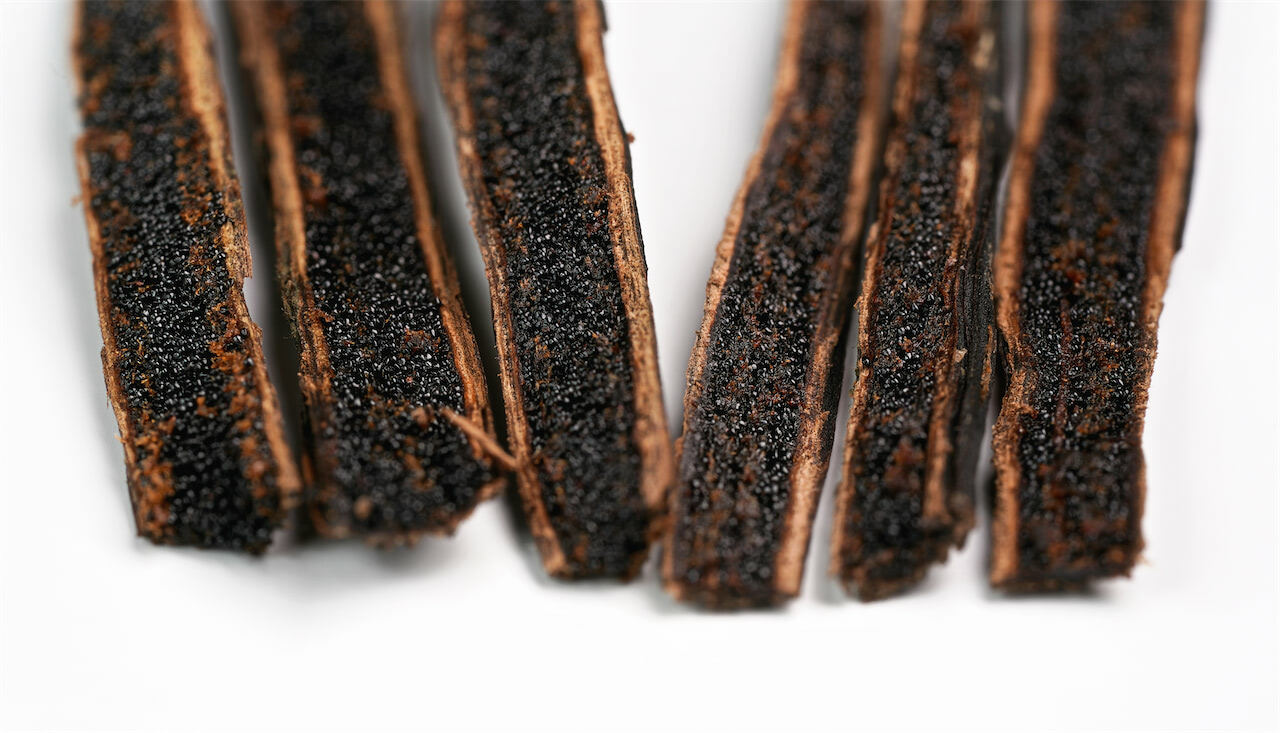
Vanilla preparations
Vanilla sugar
Traditional vanilla sugar is made by combining sugar with vanilla beans or powder. One method mixes ground bean material directly into sugar; another stores whole beans with sugar in a closed container so volatile compounds migrate into it.
This format is especially common in home cooking and foodservice.

Vanilla paste
Vanilla paste is typically a viscous dark preparation containing vanilla extract and visible vanilla particles, thickened with syrup, gums or another suitable system. There is no single universal formula, so composition varies significantly between suppliers.
It is popular in pastry, whipped cream, desserts and ice cream when both flavor and the visual cue of vanilla seeds are desirable.
Vanilla extract
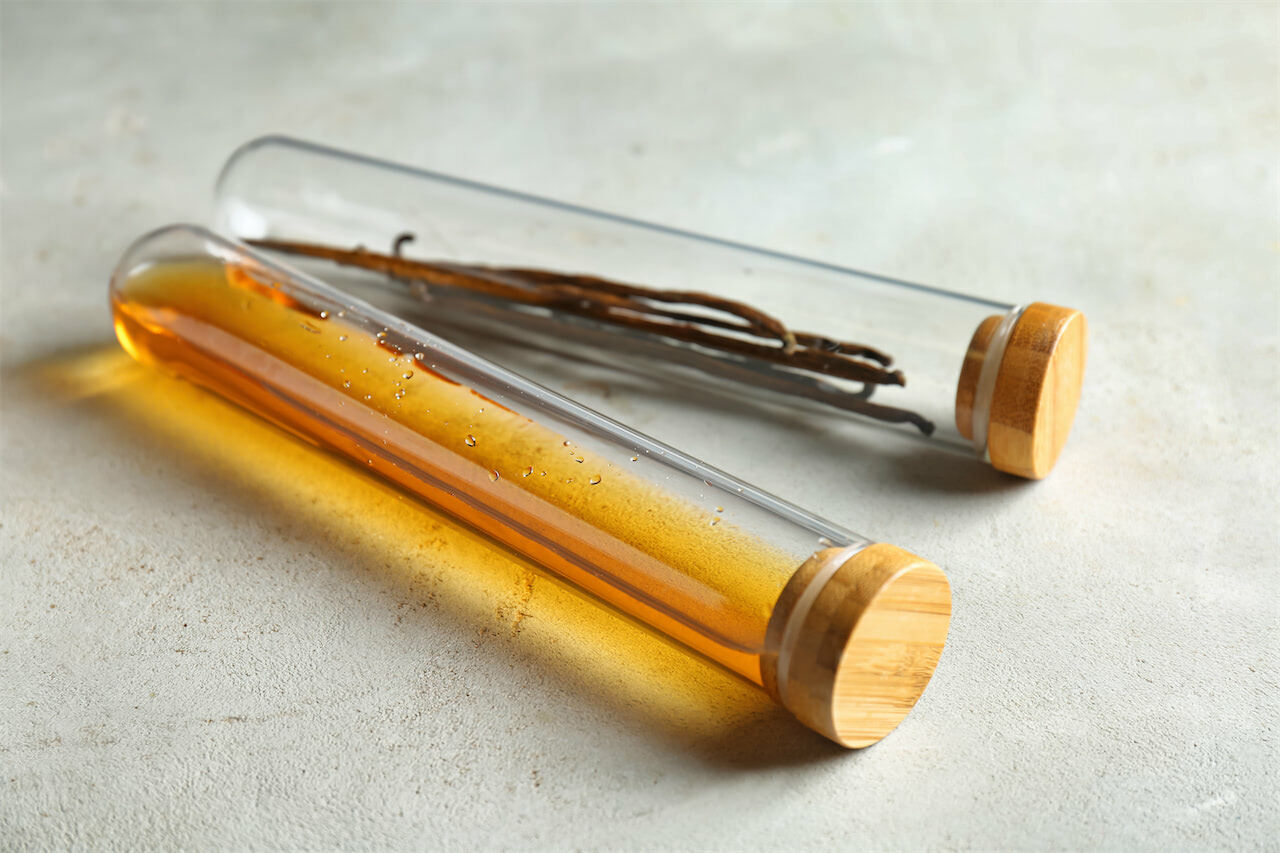
Conventional vanilla extract is commonly produced by extracting cut vanilla beans with a hydroalcoholic solvent. The result is a brown aromatic liquid whose performance depends on extraction conditions, alcohol level and concentration.
For severe heat processing, the form and point of addition should be selected carefully because some volatile components can be lost.
Supercritical CO₂ extract
Supercritical carbon dioxide can also be used to extract vanilla aromatics. The resulting extract differs from a traditional hydroalcoholic extract in composition and handling and can be useful when a low-residual-solvent process is desired.
Does vanilla essential oil exist?
Vanilla is not a conventional essential-oil crop: its key aromatic material is not obtained by ordinary steam distillation in the way peppermint or citrus oils are. Products marketed as “vanilla essential oil” may instead be extracts, absolutes, oleoresins, infused oils or compounded fragrances, so the specification should be checked carefully.
WM offers vanilla flavor systems and application support for products that need different levels of naturalness, intensity, process stability and cost.
Reference resources: EAEU TR CU 029/2012; Codex Alimentarius CXG 66-2008; European Commission — EU rules on food flavourings.